Adaptive Surfing Beaches in Spain | Guide to Accessible Beaches
Introduction to Adaptive Surfing at Spanish Beaches
Spain has exceptional natural heritage: thousands of kilometers of coastline on the Atlantic and Mediterranean. But how many beaches are truly accessible for people with motor disabilities? The Alvin Bayona Foundation has identified and worked at key beaches that offer the necessary conditions to practice adaptive surfing safely.
Best Beaches for Adaptive Surfing by Autonomous Community
Catalonia
Barcelona Coast
A useful area to start looking for adaptive surfing sessions thanks to connectivity and general services. Before travelling, confirm the real water access, staff support and amphibious equipment with the local school or municipality.
Andalusia
Costa de la Luz
Cadiz has a strong surf culture, but adaptive suitability depends on the exact meeting point, sea conditions and available support on the day. Validate those details before planning the trip.
This guide will expand as more beaches in Galicia, Asturias, Valencia and other coastal regions are validated against real accessibility criteria.
Selection Criteria for Accessible Beaches
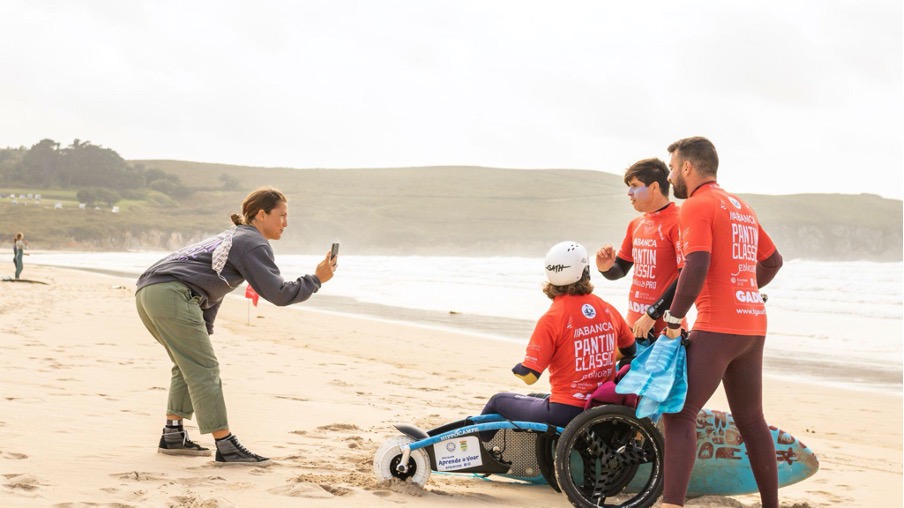
Not all beaches are the same. An 'adapted' beach for surfing must meet key criteria: barrier-free access (ramps or compacted sand), accessible bathrooms and showers, trained beach staff, availability of amphibious chairs, accessible nearby parking and water support services.
Tips for Planning Your Adaptive Surfing Session
Before going to a beach: contact the local school or institution to confirm availability of chairs, staff and dates. Bring an assistant. Check sea conditions. Use a life jacket. Communicate your functional level to technicians. Plan time for water acclimation.
Collaborate to Expand the Network of Accessible Beaches
Do you know a beach with potential for adaptive surfing? Work at a place with accessible infrastructure? Tell us! The Alvin Bayona Foundation constantly seeks new beaches and allies to expand the map of inclusion in water.
Frequently Asked Questions
What makes a beach 'adapted' for surfing?▼
An adapted beach for surfing must have: barrier-free access (ramps or compacted sand), accessible services, trained staff, availability of amphibious chairs, nearby accessible parking and water support services.
Are there adaptive surfing schools at these beaches?▼
Yes. Many beaches have partnerships with surfing schools that offer specialized adaptive classes, or the Alvin Bayona Foundation organizes regular sessions.
Can I find amphibious chairs at all listed beaches?▼
It depends. Some beaches have their own chairs, others partner with schools that have equipment, some require bringing your own chair. Contact the beach or school directly to confirm availability.
How can I suggest a new beach for the guide?▼
You can contact the Alvin Bayona Foundation through the contact form or email. Tell us the beach name, location, accessible infrastructure, and if there are schools or entities interested.
Is it safe to practice adaptive surfing alone?▼
It is not recommended. Adaptive surfing requires support from trained technicians, emergency assistance and constant monitoring. Always practice with qualified staff and an assistant. Safety is absolute priority.